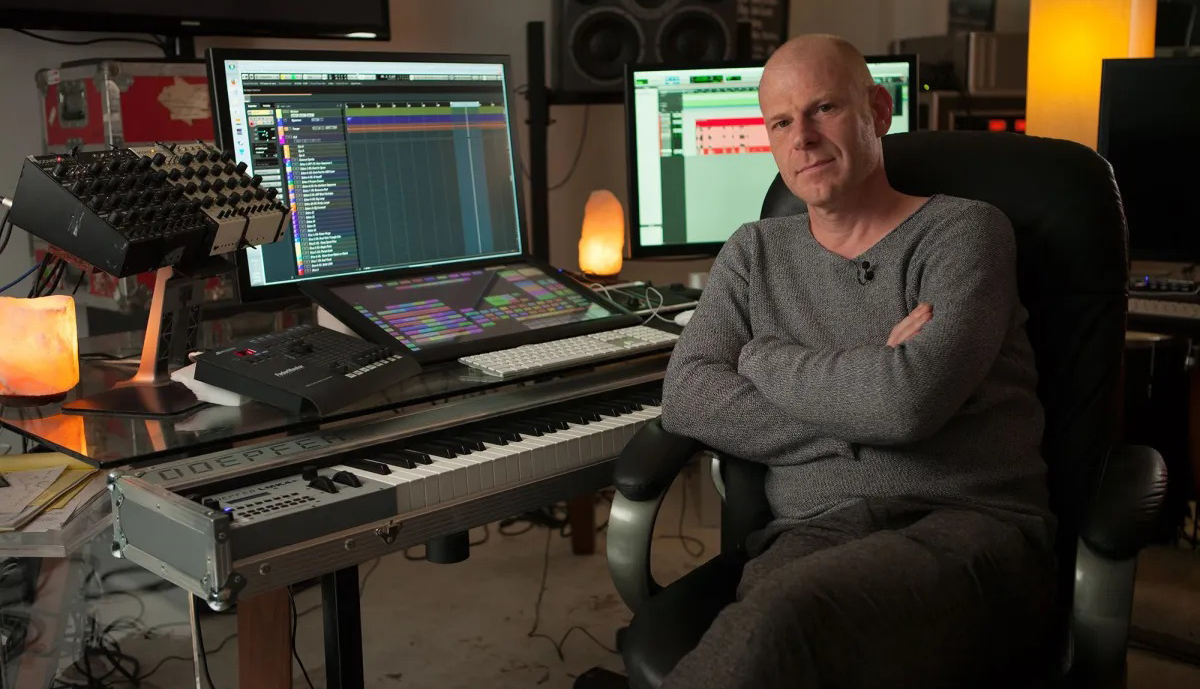
The name Junkie XL has long gone beyond its origins as an electronic music project and has become a major creative brand in contemporary cinema. Behind it stands Tom Holkenborg, a Dutch composer, producer, and sound designer whose work has helped define the sonic identity of modern blockbuster filmmaking. His scores do not simply accompany images — they shape rhythm, tension, and emotional impact on a structural level.
Holkenborg was born on February 15, 1967, in Lichtenvoorde, the Netherlands. Long before Hollywood, he built his reputation in the European electronic music scene, collaborating with acts such as Nitzer Ebb, The Art of Noise, and Fear Factory. His project Junkie XL became part of the global big beat and electronic rock movement of the 1990s. From the very beginning, he was known for blending heavy electronic programming with live instruments — a hybrid approach that later became the foundation of his film scoring style.
From electronic music to Hollywood
Holkenborg’s move into film was a natural evolution. His background in rhythm-driven, layered production made him an ideal fit for modern action cinema. A key turning point was his collaboration with Hans Zimmer, who brought him into the world of Remote Control Productions and large-scale studio films.
That partnership led to his breakout project: Mad Max: Fury Road (2015). As the film’s main composer, Junkie XL created one of the most aggressive and distinctive action scores of the decade. Massive percussion, distorted guitars, industrial textures, and full orchestra combined into a relentless sonic engine that perfectly matched George Miller’s apocalyptic vision. The score was widely praised and firmly established Holkenborg as a leading voice in blockbuster film music.
Furiosa: A Mad Max Saga — returning to the wasteland
With Furiosa: A Mad Max Saga, Junkie XL returned to the Mad Max universe and expanded the musical language he had defined in Fury Road. The score relies on huge orchestral forces, pounding percussion, and layered electronics to express both the brutality of the world and the emotional journey of its central character.
Rather than functioning as background, the music actively drives the film’s momentum, especially in chase and battle sequences. For soundtrack pages like Furiosa: A Mad Max Saga Soundtrack, Holkenborg is a defining creative force, since his musical identity is inseparable from the modern Mad Max franchise.
Deadpool (2016) — humor, energy, and genre freedom
When Junkie XL took on Deadpool, he faced a very different kind of superhero film. The character’s irreverent, self-aware tone required a score that could shift between genuine heroism and playful parody. Holkenborg responded with a flexible, genre-blending soundtrack that mixes orchestral writing with electronic and rock elements.
The Deadpool (2016) score stands out for how well it reflects the character’s dual nature — violent antihero and comedic outsider. It proved that Junkie XL could move beyond pure intensity and bring wit, color, and personality into a franchise film without losing musical impact.
Godzilla x Kong: The New Empire — scale and mythology
In Godzilla x Kong: The New Empire (2024), Junkie XL worked within the established musical world of the MonsterVerse while adding his own powerful sonic signature. The score combines epic orchestral themes with heavy electronic rhythms to convey the sheer scale and mythic status of its giant creatures.
Holkenborg’s music in this film does more than underscore action — it presents Godzilla and Kong as legendary figures, giving their battles a sense of operatic grandeur. It is another example of how he brings emotional and narrative weight to massive franchise filmmaking.
Other essential Junkie XL scores
Beyond those key soundtracks, several other films are central to understanding Junkie XL’s impact:
- Batman v Superman: Dawn of Justice (2016) – co-composed with Hans Zimmer, introducing a bold new Batman theme built on distorted electric cello and aggressive rhythmic design.
- Justice League (2017) and Zack Snyder’s Justice League (2021) – Holkenborg’s expanded score for Snyder’s cut became a four-hour musical architecture, far more thematic and experimental than the original release.
- Alita: Battle Angel (2019) – a mix of emotional character themes and large-scale action writing.
- 300: Rise of an Empire (2014) – a brutal, percussion-driven continuation of the sonic world of 300.
- The Divergent Series: Allegiant (2016) – blending futuristic electronics with symphonic storytelling.
Style and influence
Junkie XL’s sound is instantly recognizable. Three elements define his musical identity:
- Rhythmic power — percussion and pulse are central to almost everything he writes.
- Hybrid orchestration — traditional orchestra merged with modern electronic production.
- Direct, bold themes — simple but forceful musical ideas designed to cut through massive soundscapes.
This approach has made him one of the most in-demand composers for large-scale action and franchise films, where music must be both epic and contemporary.
Junkie XL as a cinematic brand
Today, Junkie XL is more than a pseudonym — it is a signature. Whether on Deadpool (2016), Furiosa: A Mad Max Saga, or Godzilla x Kong: The New Empire (2024), his name signals a soundtrack built on power, intensity, and modern sonic design.
On soundtrack-focused websites, a Junkie XL composer page functions as a hub connecting dozens of major film projects. Together, they reveal a composer who has helped shape the sound of 21st-century blockbuster cinema and whose music has become inseparable from the worlds it scores.