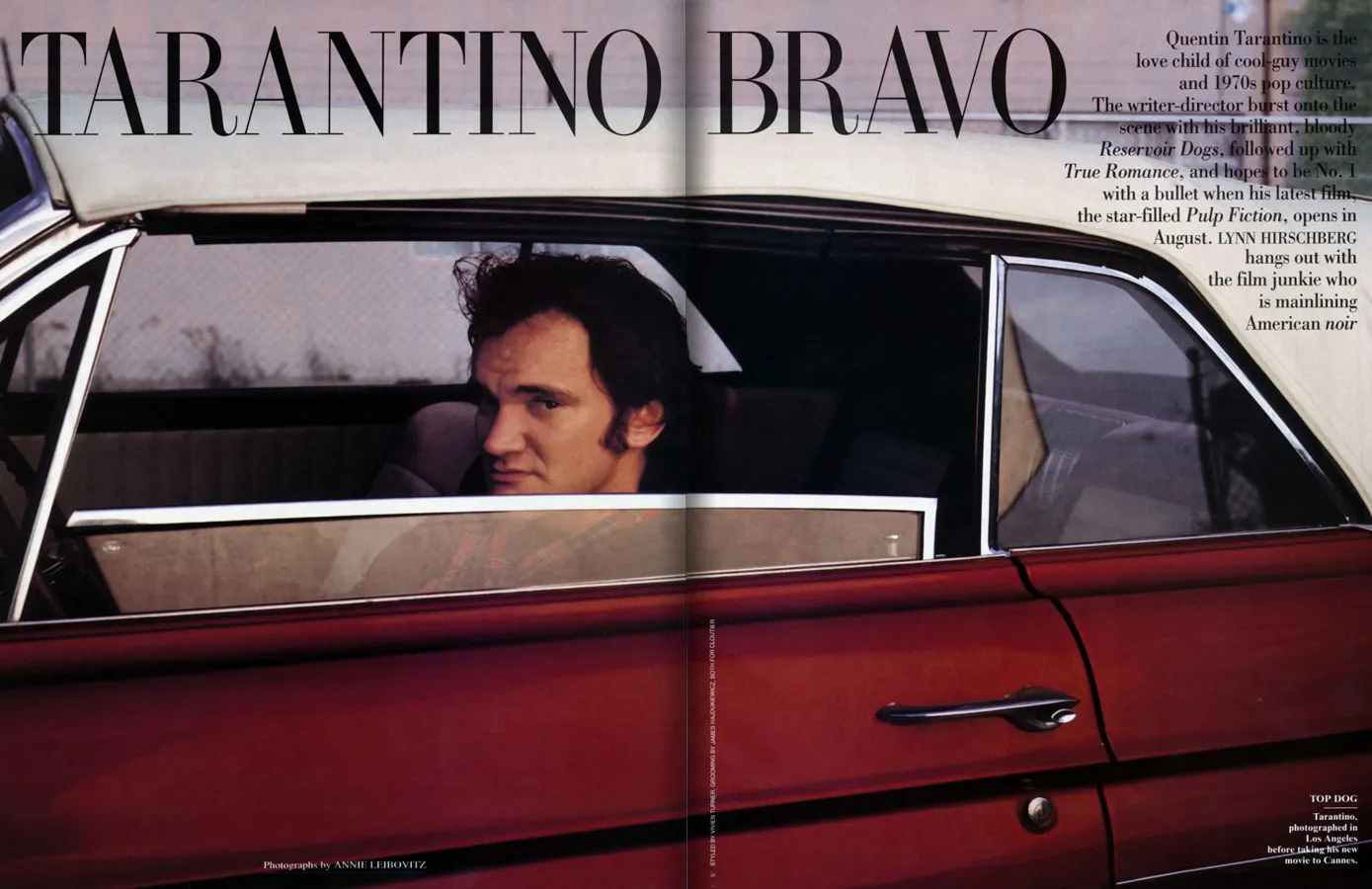
Quentin Tarantino and the art of cinematic mixtapes
Quentin Tarantino is not a film composer, yet few directors have shaped the musical identity of modern cinema as powerfully as he has. His films are remembered not only for their dialogue, violence, and nonlinear storytelling, but for their soundtracks — carefully curated collections of songs that feel less like background music and more like the director’s personal record collection brought to life.
Tarantino does not use original scores in the traditional sense. Instead, he builds what are essentially cinematic mixtapes, pulling from decades of pop, soul, surf rock, Italian film music, funk, and obscure vinyl. Each track is chosen not to underline emotion in a conventional way, but to create contrast, irony, or unexpected emotional depth.
Music as identity, not decoration
In Tarantino’s films, music defines character and tone before a single line of dialogue is spoken. A song doesn’t simply accompany a scene — it frames how the audience experiences it. He often places upbeat or nostalgic tracks over moments of violence or tension, creating a surreal emotional disconnect that has become one of his trademarks.
This approach reached a cultural breakthrough with the Pulp Fiction (1994). The revival of Dick Dale’s “Misirlou” and the prominence of retro soul and rock didn’t just support the film — they reshaped how soundtracks could influence pop culture. The album became a standalone hit, proving that a director’s musical taste could be as iconic as the movie itself.
Kill Bill and the global mixtape
With Kill Bill Vol. 1 & 2, Tarantino took his approach even further. The films mix Japanese rock, Ennio Morricone-style western themes, kung-fu film cues, and 1970s soul into a single, hyper-stylized musical universe. Instead of aiming for stylistic unity, he embraces collision — letting radically different sounds exist side by side.
This chaotic but carefully controlled approach mirrors the film’s narrative structure. Music becomes part of the storytelling, marking shifts in tone, genre, and emotional intensity without relying on traditional scoring.
Inglourious Basterds and musical anachronism
The Inglourious Basterds (2009) is a perfect example of Tarantino’s refusal to be bound by historical accuracy in music. The film is set during World War II, yet the soundtrack includes tracks that belong to much later decades. Rather than breaking immersion, this creates a heightened cinematic reality — one that feels mythic rather than realistic.
By using music as a tool of reinterpretation rather than reconstruction, Tarantino turns history into something fluid, stylized, and emotionally immediate.
Nostalgia and radio culture in Hollywood
With the Once Upon a Time … in Hollywood 2019, Tarantino built his most immersive musical environment yet. The soundtrack doesn’t just include songs from late-1960s Los Angeles — it recreates the entire radio culture of the period, complete with DJ chatter and commercial breaks.
This transforms the film into a time capsule. Music is not simply heard; it is lived. The audience is placed inside a specific moment in cultural history, experiencing the era through the sounds that once filled car radios and living rooms.
A director with a curator’s ear
Tarantino’s musical taste is famously eclectic, but it is never random. He searches for tracks that have emotional memory attached to them — songs that feel lived in, forgotten, or rediscovered. Many of his soundtrack choices revive obscure or overlooked recordings, giving them new cultural life.
This curatorial instinct is why Tarantino’s soundtracks often chart independently of the films. They don’t just remind listeners of scenes — they stand as musical statements in their own right.
Other films that define his musical style
Beyond his most famous titles, Tarantino’s musical approach is also deeply embedded in films such as Reservoir Dogs, Jackie Brown, Django Unchained, and The Hateful Eight. Each uses music not as neutral accompaniment, but as a narrative force that shapes mood, character, and memory.
Why Tarantino’s approach still matters
Quentin Tarantino changed how directors think about music. He showed that a soundtrack does not need to be original to be original. By treating songs as storytelling tools rather than background noise, he created a new model for how films can sound.
In an era dominated by algorithmic playlists and digital consumption, Tarantino’s deeply personal, vinyl-driven musical choices remain a powerful reminder that taste, memory, and curation can be just as cinematic as any image on screen.
Quentin Tarantino has always treated music not as background, but as a second voice in his films. Long before streaming and algorithmic playlists, he was already acting as a curator, digging through vinyl crates, radio recordings, and forgotten soundtracks to find songs that carried emotional and cultural weight. When these tracks enter his movies, they don’t just support the scene — they redefine it.
The playlist below brings together the sounds that shaped Tarantino’s cinematic universe. These are the songs that turned ordinary moments into iconic scenes, giving his films their unmistakable rhythm, attitude, and soul. Listening to them outside the movies reveals just how carefully his musical world has been constructed — not by genre or era, but by feeling, memory, and storytelling.