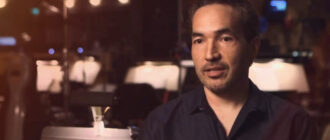
Hans Zimmer is one of the most influential composers of contemporary media. Born on September 12, 1957, in Frankfurt, Germany, he did not follow a strictly classical academic path like many traditional composers. Instead, his background combined self-taught experimentation, synthesizers, and early work in pop and electronic music. This unconventional foundation later became his greatest strength.
Zimmer first gained major recognition in Hollywood with Rain Man (1988), earning his first Academy Award nomination. Throughout the 1990s and 2000s, he reshaped blockbuster scoring by blending orchestral power with electronic textures, bold rhythmic structures, and minimalist motifs. His approach moved away from purely melodic symphonic writing toward atmosphere, pulse, and scale.
Beyond film, Zimmer’s influence extends into television, live arena performances, and large-scale collaborative production through his Remote Control Productions studio, where he mentored a generation of modern composers.
Interesting Facts:
- Academy Award winner for The Lion King (1994) and Dune (2021).
- Known for pioneering the hybrid orchestral-electronic blockbuster sound.
- Frequently collaborates with directors such as Christopher Nolan, Denis Villeneuve, and Ridley Scott.
Landmark Projects
Zimmer’s music has become inseparable from some of the most defining productions of the last three decades.
- The Lion King (1994) — emotionally powerful themes blended with African musical influences.
- Gladiator (2000) — epic orchestration combined with haunting вокальные партии.
- The Dark Knight Trilogy (2005–2012) — redefined the sonic identity of superhero films.
- Inception (2010) — introduced the now-famous “braaam” brass aesthetic into mainstream culture.
- Interstellar (2014) — organ-driven, minimalist score exploring time and space.
- Dune (2021–2024) — experimental textures and unconventional instrumentation shaping a sci-fi epic.
- Pirates of the Caribbean (2003) — adventurous themes that became pop-culture staples.
Most Recognizable Tracks
“Cornfield Chase” (Interstellar, 2014)
One of Zimmer’s most atmospheric and emotionally restrained works. Built around repeating organ patterns, the piece creates a sense of forward motion and quiet determination. The minimal harmonic progression allows tension and anticipation to build naturally, reflecting both human vulnerability and cosmic scale. The church organ — recorded in London’s Temple Church — gives the composition a sacred, almost metaphysical quality. Over time, “Cornfield Chase” has become one of the defining sound signatures of modern science fiction scoring.
“He’s a Pirate” (Pirates of the Caribbean: The Curse of the Black Pearl, 2003)
Energetic, rhythm-driven, and instantly recognizable. The driving string ostinatos and bold brass fanfares create a sense of reckless adventure. While the Pirates score involved multiple composers within the production team, this theme became the franchise’s musical identity and one of the most recognizable adventure cues of the 21st century. Its momentum and melodic clarity helped solidify Zimmer’s dominance in blockbuster action scoring.
“Now We Are Free” (Gladiator, 2000)
A deeply emotional closing piece blending orchestral restraint with Lisa Gerrard’s haunting вокальные линии. The track avoids excessive bombast, instead building intimacy through slow harmonic development and lyrical phrasing. It transcended the film itself, becoming a staple in live concerts and emotional montages worldwide. The fusion of orchestral scoring with world-music influences helped redefine the sound of historical epics.
“Time” (Inception, 2010)
Perhaps Zimmer’s most widely recognized standalone composition. The track is structured around repetition — a simple piano motif that gradually expands into layered strings and powerful brass. Rather than relying on complex melody, Zimmer builds emotional impact through incremental growth and dynamic escalation. “Time” has been used extensively in trailers, edits, and live performances, becoming a cultural shorthand for emotional climax.
“Day One” (Interstellar Theme, 2014)
Often associated with the emotional core of Interstellar, this theme emphasizes simplicity and space. The restrained orchestration allows silence to function as part of the composition. Subtle organ textures and evolving harmonies create a feeling of longing and inevitability. Unlike traditional sci-fi scoring, the piece avoids aggressive futurism, focusing instead on humanity, distance, and memory.
“Drink Up Me Hearties Yo Ho” (Pirates of the Caribbean: At World’s End, 2007)
A grand, fully developed orchestral statement of the Pirates saga. Expansive brass lines and sweeping string passages elevate the adventurous motifs into something almost symphonic in scale. The track serves as a culmination of the franchise’s musical identity, combining heroism, nostalgia, and spectacle. It remains one of the most performed pieces from the series in Zimmer’s live concerts.
Legacy and Impact
Hans Zimmer transformed blockbuster scoring by prioritizing texture, rhythm, and atmosphere alongside melody. His hybrid style influenced an entire generation of composers and reshaped how trailers, action films, and epic dramas sound today.
Rather than simply supporting visuals, Zimmer’s music often defines the emotional architecture of a project. His work continues to evolve, proving that large-scale orchestral music can remain innovative in the modern era.