“True Faith” is one of the songs that helped define the sound of the late 1980s, expanding New Order’s reach far beyond the UK club scene into global pop culture. Released on 20 July 1987 as part of the band’s singles compilation Substance 1987, the track combined electronic rhythms with introspective lyrics and became one of New Order’s most enduring songs.
Though it was not attached to a regular studio album, “True Faith” became a standout single by peaking at number 4 in the United Kingdom and becoming the band’s first single to chart on the Billboard Hot 100 in the United States, where it reached number 32. A successful remix released in 1994 later brought it back into UK charts at number 9, introducing the song to a new generation of listeners.
A blend of synth and emotion
Musically, “True Faith” reflects New Order’s unique fusion of post‑punk roots, electronic dance sensibilities, and introspective lyricism. The track’s production — co‑led by the band and producer Stephen Hague — features shimmering synth lines alongside a steady, danceable beat. Its lyrics, written with a mix of poetic ambiguity and emotional tension, touch on themes of change, reflection, and personal uncertainty.
This balance of sound and meaning is part of what has kept the song relevant decades after its release: it works as both a club anthem and a reflective listening experience.
“True Faith” on screen and in gaming
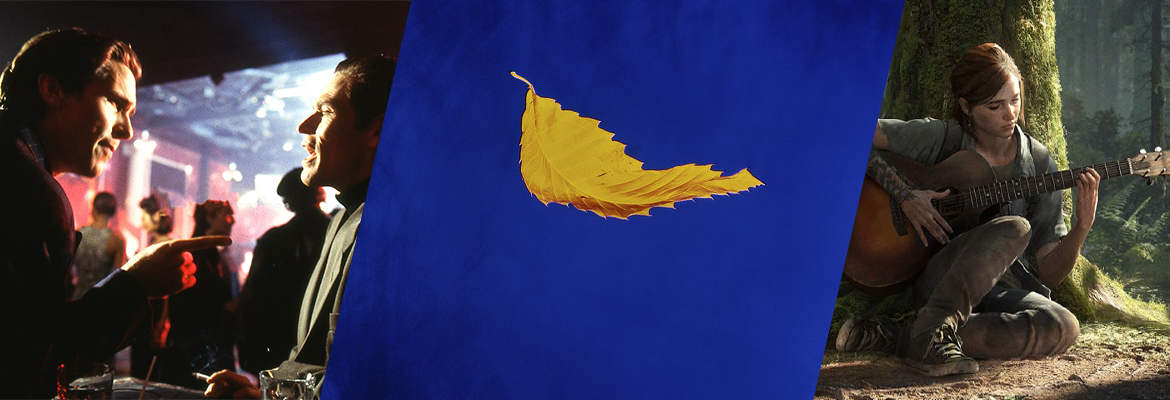
The song’s cinematic qualities have made it attractive for use in visual media, most famously in American Psycho (2000). In director Mary Harron’s adaptation of Bret Easton Ellis’s novel, “True Faith” plays during a club scene where the protagonist Patrick Bateman is immersed in the 1980s nightlife, underscoring the film’s tension between surface glamour and internal emptiness.
Beyond cinema, “True Faith” has also found a place in modern gaming culture through The Last of Us Part II. In the promotional material and in parts of the story, an acoustic cover of the song (inspired by Lotte Kestner’s version) is used to deepen emotional resonance. This rendition, tied to key character moments, helped introduce the song to a new generation of players and reflect its emotional weight in interactive storytelling.
Covers and reinterpretations
Over the years, “True Faith” has inspired a wide range of covers across genres and styles. One of the most high‑profile versions was recorded by George Michael in 2011 for Comic Relief, which charted in the UK and brought the song back into mainstream attention.
The track has also been performed by other artists in various interpretations, from rock and alternative versions to acoustic interpretations through platforms like The Last of Us Part II, showcasing the song’s versatility and emotional depth.
Why “True Faith” still resonates
More than three decades after its release, “True Faith” remains more than a nostalgic staple of the 1980s. Its blend of danceable beats with lyrical introspection gives it a timeless quality that continues to connect with listeners, whether in the context of film, gaming, or everyday listening. Its legacy also reflects New Order’s influence on the intersection of electronic music and rock — a hybrid that has shaped many genres that followed.