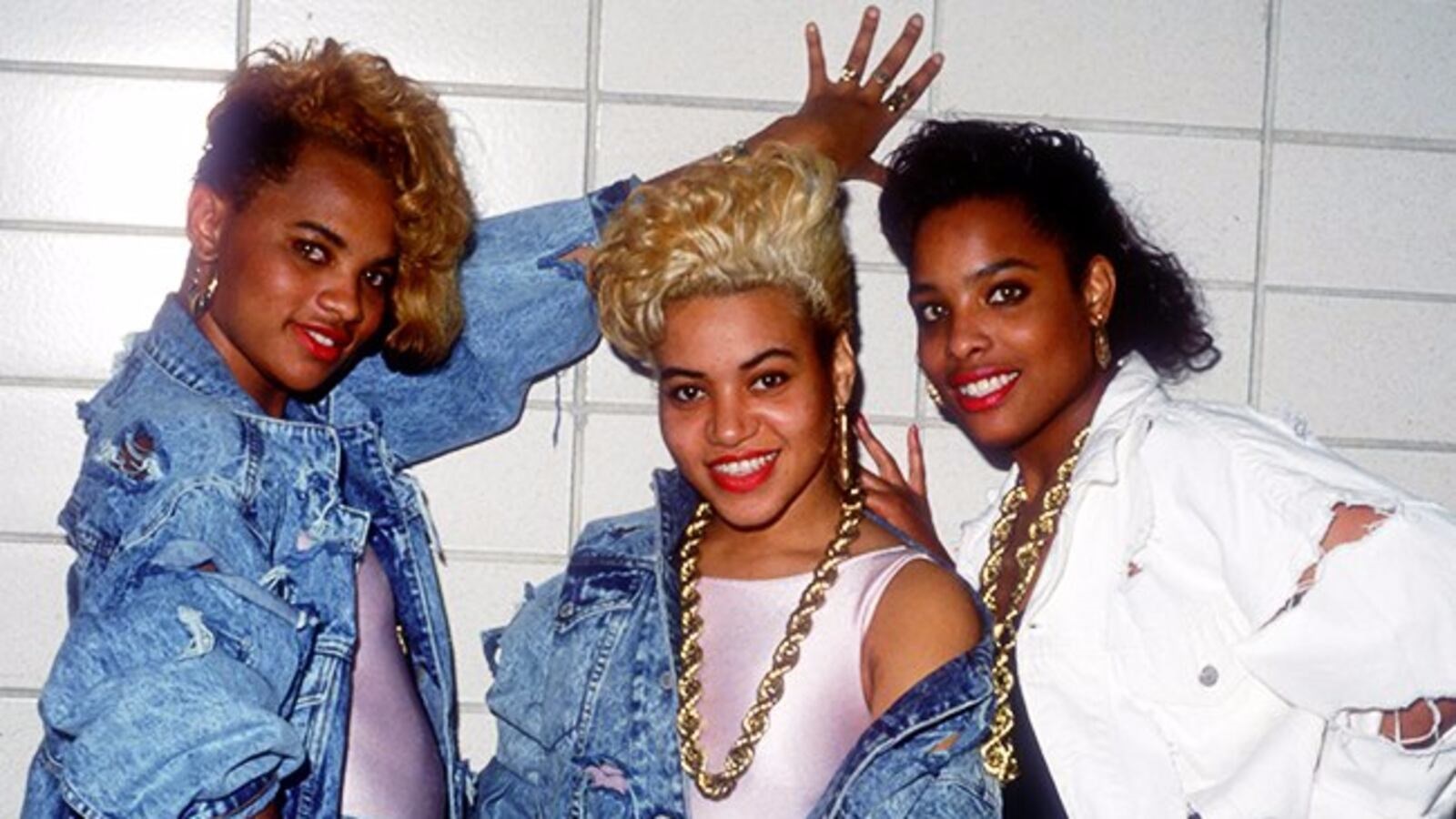
Few hooks in late-80s music history are as instantly recognizable as this one. “Push It” by Salt-N-Pepa is more than a dance-floor classic — it is a landmark moment in hip-hop’s crossover into mainstream pop culture.
Originally released in 1987 as a B-side to “Tramp,” the track exploded after receiving heavy club and radio play. It was later included on the group’s album Hot, Cool & Vicious (reissue version). Produced by Hurby “Luv Bug” Azor, the song helped propel Salt-N-Pepa — Cheryl “Salt” James, Sandra “Pepa” Denton, and DJ Spinderella — into global stardom.
Musically, “Push It” blends electro-funk drum programming, minimal bass, and call-and-response vocal energy. It carries the stripped-down pulse of mid-80s hip-hop but delivers it with pop accessibility and bold attitude. The beat is mechanical yet hypnotic. The hook is repetitive but explosive. It demands movement.
At a time when female rappers were rarely given mainstream exposure, Salt-N-Pepa shattered expectations. “Push It” became a Top 20 hit on the Billboard Hot 100, earned a Grammy nomination, and turned the trio into international icons. The song’s provocative phrasing, playful confidence, and unapologetic stage presence challenged gender norms within hip-hop and the broader music industry.
The late 1980s marked a transitional era: hip-hop was breaking out of its underground origins, MTV was reshaping pop stardom, and dance music was becoming increasingly club-driven. “Push It” sat perfectly at that intersection. It was bold. It was physical. It was impossible to ignore.
And like all true anthems, it refused to stay confined to its decade.
Film, TV & Cultural Appearances
Over the years, “Push It” has become shorthand for swagger, comedic exaggeration, empowerment, and throwback energy. Its presence across film and television spans more than four decades.
Saturday Night Live (1975– ) — Referenced and performed in sketches, often leaning into its high-energy call-and-response structure.
WKRP in Cincinnati (1978–1982) — Early integration of hip-hop into mainstream television soundscapes.
The Simpsons (1989– ) — Used as a cultural punchline and nostalgic reference point.
The Fresh Prince of Bel-Air (1990–1996) — Fits naturally within the show’s hip-hop-influenced atmosphere.
Beverly Hills, 90210 (1990–2000) — Appears in party and club sequences reflecting youth culture.
Buffy the Vampire Slayer (1997–2003) — Used for tonal contrast between supernatural drama and playful nostalgia.
South Park (1997– ) — Referenced for satirical exaggeration.
Family Guy (1999– ) — Played for comedic absurdity and instant recognition.
Queer as Folk (1999–2000 UK / 2000–2005 US) — Reinforces club culture and queer nightlife energy.
Malcolm in the Middle (2000–2006) — Amplifies chaotic comedic pacing.
Gilmore Girls (2000–2007) — Used in nostalgic or humorous sequences.
Clocking Off (2000–2003) — Grounds late-90s/early-2000s atmosphere with era-appropriate sound.
Phoenix Nights (2001–2002) — Embraces its dance-floor familiarity.
Everwood (2002–2006) — Appears in lighter, character-driven moments.
Peep Show (2003–2015) — Used ironically within awkward social situations.
Joan of Arcadia (2003–2005) — Adds cultural texture to early-2000s storytelling.
Everybody Hates Chris (2005–2009) — Perfectly aligns with 80s nostalgia and period authenticity.
The Goldbergs (2013– ) — Celebrates its 80s roots in throwback montages.
Brooklyn Nine-Nine (2013–2021) — Used for comedic bravado and exaggerated confidence.
Mr. Robot (2015–2019) — Creates deliberate tonal contrast between cyber-thriller tension and retro club energy.
Andi Mack (2017–2019) — Introduces the track to a younger Disney Channel audience.
The Good Doctor (2017– ) — Used within character-driven moments to shift tone.
The Orville (2017– ) — Leans into retro pop references.
Beat Shazam (2017– ) — A natural fit for music-recognition competition energy.
The Neighborhood (2018– ) — Employed in celebratory or comedic sequences.
Turn Up Charlie (2019) — Reinforces club-centric themes.
Sweet Magnolias (2020– ) — Adds nostalgic uplift to character arcs.
The Pentaverate (2022) — Uses the track for exaggerated retro flair.
From (2022– ) — Juxtaposes upbeat rhythm against darker narrative tension.
Obliterated (2023) — Fits seamlessly into high-energy action-comedy pacing.
Quiet on Set: The Dark Side of Kids TV (2024) — Appears within documentary context, anchoring cultural memory of a specific media era.
Beyond television, the song has appeared in films such as Nothing to Lose (1997), Charlie’s Angels (2000), and The Hot Chick (2002), reinforcing its long-standing connection to high-energy comedic and action-driven storytelling.
A Cultural Milestone
“Push It” did more than dominate dance floors — it expanded what female-led hip-hop could look and sound like in the mainstream. Salt-N-Pepa were bold, playful, stylish, and unapologetic at a time when the industry rarely gave women that platform.
The song’s beat still lands. The hook still ignites crowds. The phrase “push it real good” has transcended music, becoming part of everyday language and meme culture.
It is provocative without being dated. Campy without losing power. Nostalgic without fading into obscurity.
“Ah, push it…”
That whisper still signals what’s coming next: confidence. Energy. Attitude.
More than three decades after its release, “Push It” remains a cornerstone of hip-hop’s mainstream breakthrough and a permanent fixture in pop culture rotation. Some songs belong to a party.
This one built the party.