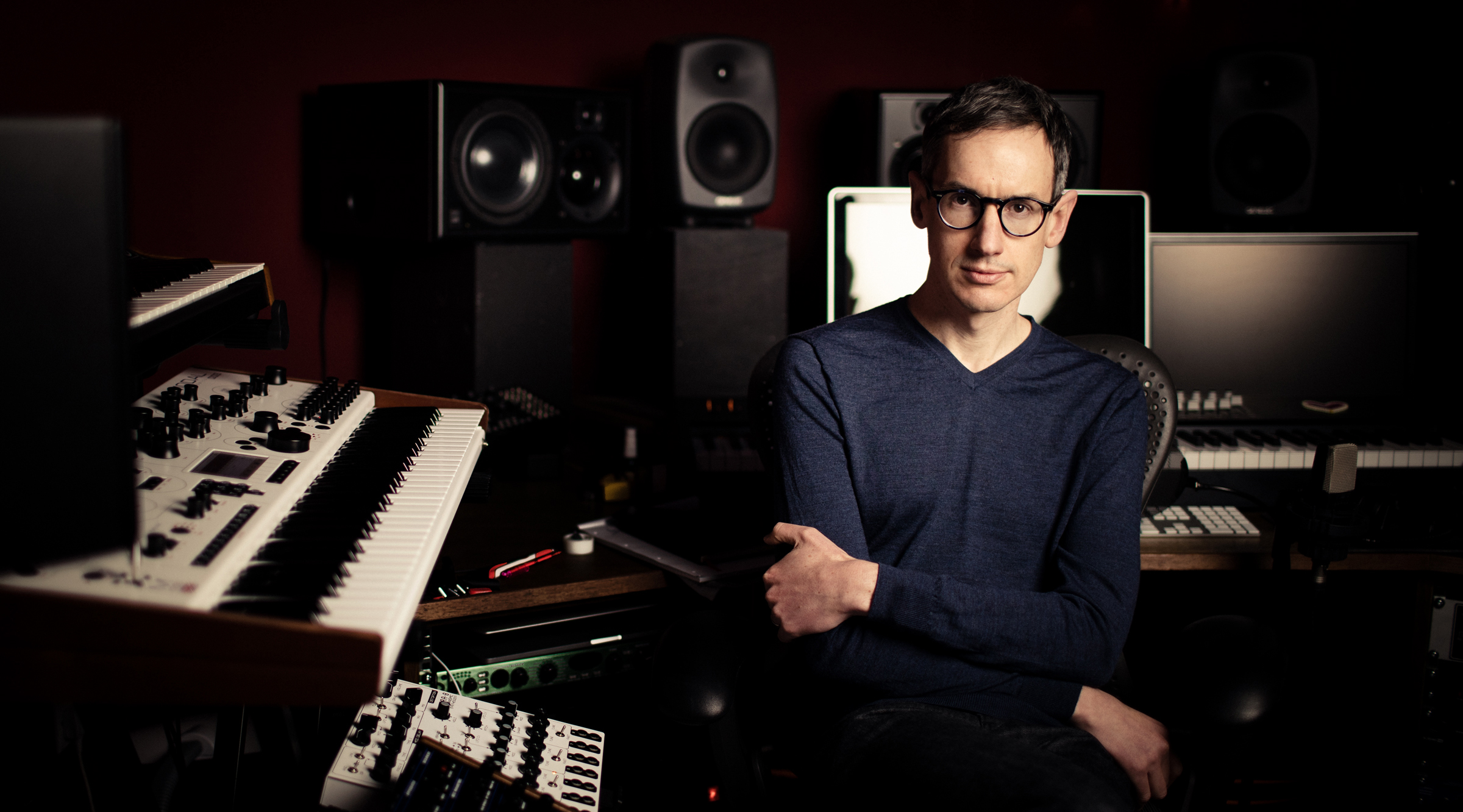
Steven Price may not be as widely known to general audiences as some blockbuster composers, but his music has become a defining element of contemporary cinema. He belongs to a generation of composers who work not with obvious melodies, but with sensation: tension, pressure, movement, and silence. His scores are not designed to please — they are designed to immerse.
Price is especially valued for his ability to build emotional intensity without relying on traditional thematic statements. Clear, memorable melodies are often absent from his work. Instead, he focuses on rhythm, texture, pulse, and sonic space, turning music into a structural part of the film’s storytelling rather than a decorative layer.
Entering the film industry
Before establishing himself as an independent composer, Steven Price spent many years working within Hans Zimmer’s Remote Control Productions. This period shaped his technical discipline and his understanding of how music interacts with editing, pacing, and narrative structure.
However, Price quickly moved beyond the “Zimmer school.” His personal style became more restrained, minimalistic, and psychologically precise. Rather than overwhelming scenes with orchestral weight, he leaves space — allowing tension to emerge naturally and often more powerfully.
Breakthrough and international recognition
Price’s major breakthrough came with Gravity. The score for this film demonstrated how music can exist on the edge between sound design and silence. Instead of traditional cues, Price created an auditory experience that conveyed isolation, vastness, and vulnerability in space.
This innovative approach earned him the Academy Award for Best Original Score and firmly established him as one of the most distinctive composers of his generation.
The signature style of Steven Price
Steven Price’s music is immediately recognizable once you know what to listen for. Its defining characteristics include:
- minimalism and avoidance of overt themes
- extensive use of electronic textures
- close synchronization with editing and pacing
- music as a tool for tension rather than emotional instruction
- deliberate use of silence and negative space
His scores often create a sense of motion even in visually static scenes, making them especially effective in thrillers, dramas, and action films.
Key films and projects
Below is a selection of projects that best illustrate the range and evolution of Steven Price’s work:
- Gravity (2013)
- Fury (2014)
- Suicide Squad (2016)
- The Running Man (2025)
- Last Night in Soho (2021)
- Over the Moon (2020)
- Our Planet (2019)
- Heads of State (2025)
Each of these films highlights a different aspect of Price’s compositional approach — from raw psychological pressure to precise rhythmic drive.
Steven Price today
In recent years, Steven Price has continued to work on large-scale international productions while maintaining a strong personal identity. His music remains highly functional for mainstream cinema, yet never generic. He doesn’t follow trends — he quietly shapes them.
Notably, Price moves confidently between feature films, animation, and documentary projects. This versatility reflects a deep understanding of how music operates across different narrative forms.
Why Steven Price matters in modern cinema
Steven Price represents a shift in how film music functions. He has shown that a score does not need to draw attention to itself to be essential. His music often operates beneath the surface, amplifying emotion and tension without explicit signals.
In an era where cinema increasingly relies on atmosphere and sensory experience rather than dialogue, composers like Steven Price become central figures. He is not just supporting modern cinema — he is helping define how it sounds.