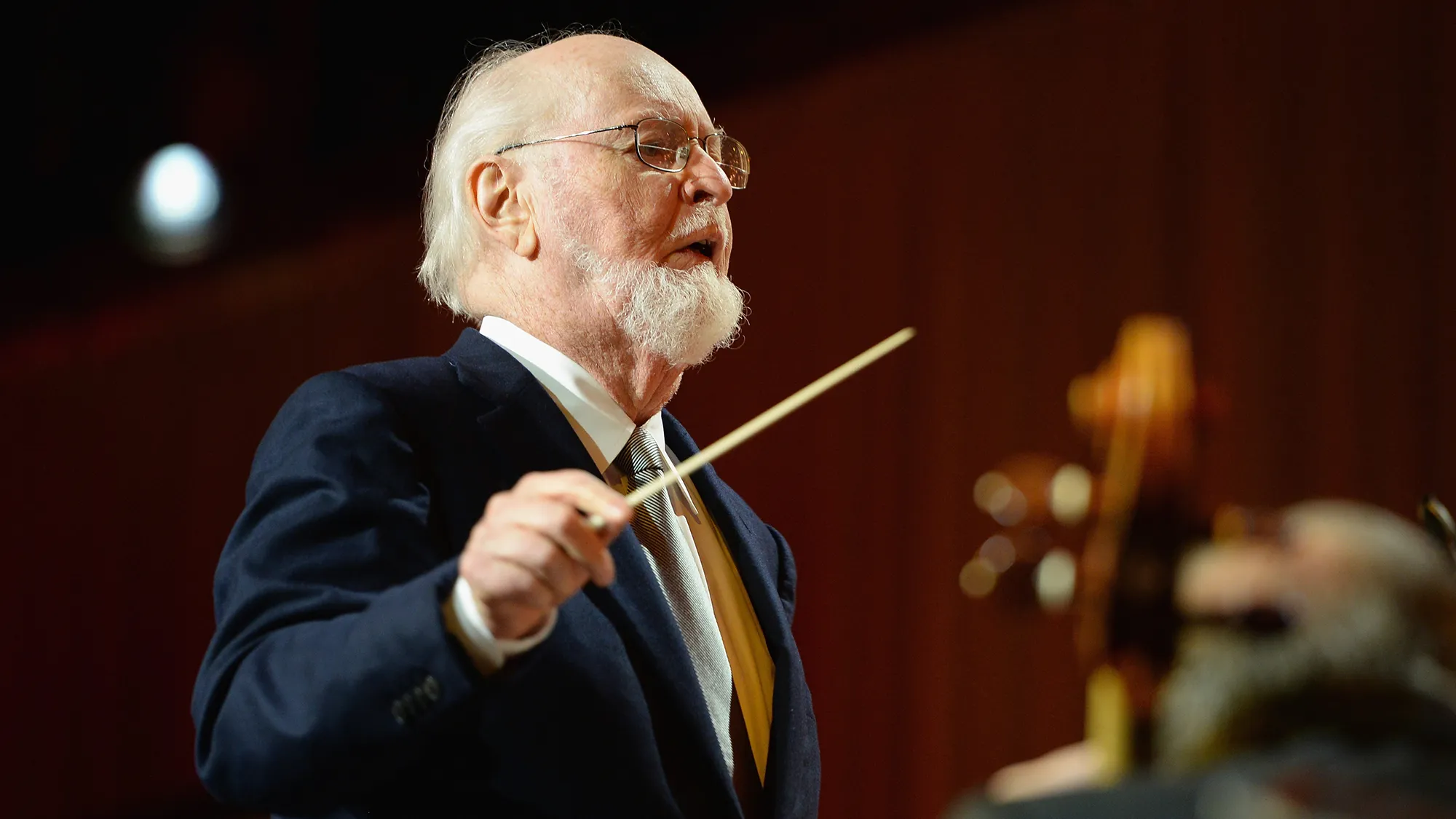
Discover the works that have made John Williams one of the most influential composers in modern history.
John Williams is widely regarded as one of the greatest composers of the 20th and 21st centuries. Born on February 8, 1932, in New York, he studied at Juilliard and began his career as a jazz pianist before transitioning into orchestration and film scoring. His classical foundation combined with an instinct for melody allowed him to revive the grand symphonic tradition in mainstream entertainment.
Williams rose to international prominence in the 1970s, redefining how orchestral music functions in blockbuster storytelling. His collaboration with directors such as Steven Spielberg and George Lucas shaped the sound of modern cinema and set new standards for thematic scoring. Across decades, his music has extended beyond film into television, concert works, and major global events — including Olympic themes and presidential ceremonies.
Interesting Facts:
- Winner of 5 Academy Awards and holder of over 50 Oscar nominations — one of the most nominated individuals in Academy history.
- Longtime conductor of the Boston Pops Orchestra.
- Known for writing distinct leitmotifs — themes assigned to characters, ideas, and worlds.
Landmark Projects
John Williams’ music has defined entire generations of storytelling across film and global cultural events.
- Star Wars Saga (1977–2019) — one of the most recognizable musical franchises ever created.
- Harry Potter Series (2001–2004) — introduced a magical musical identity that shaped the Wizarding World.
- Indiana Jones Series — adventurous orchestral themes that became cultural staples.
- Jurassic Park (1993) — majestic and awe-inspiring symphonic writing.
- Jaws (1975) — minimalist suspense built from two unforgettable notes.
- Olympic Fanfare and Theme (1984) — music that transcended film and entered global ceremonial history.
- Home Alone (1990) — festive orchestration blending childlike wonder with classical choral textures; “Somewhere in My Memory” became a modern Christmas standard.
Most Recognizable Tracks
- “Hedwig’s Theme” (Harry Potter and the Sorcerer’s Stone, 2001)
Perhaps the most instantly recognizable theme in modern fantasy. Built around the delicate, almost hypnotic sound of the celesta, the melody creates a sense of mystery and wonder within seconds. Williams crafted a theme that feels timeless — magical but slightly melancholic, innocent yet complex. Over the years, it became the defining musical identity of the entire Wizarding World, reused and reinterpreted far beyond the first film.
- “Theme from Jurassic Park” (1993)
A sweeping orchestral composition that captures awe, discovery, and grandeur. The slow-building introduction gives way to a triumphant melodic statement carried by full strings and brass, reflecting both the beauty and scale of the resurrected prehistoric world. The theme doesn’t rely on aggression — it relies on emotional lift. It remains one of the most powerful examples of how music can elevate cinematic spectacle into something almost spiritual.
- “Carol of the Bells” (Home Alone, 1990)
Williams’ arrangement of the traditional Ukrainian carol adds dramatic orchestral weight while preserving its festive urgency. In Home Alone, the piece underscores both tension and holiday atmosphere, blending choir and orchestra to create something simultaneously grand and playful. It has since become closely associated with the film’s identity and remains a seasonal staple for audiences worldwide.
- “The Imperial March” (The Empire Strikes Back, 1980)
One of the most famous villain themes ever written. Driven by commanding brass and a relentless rhythmic structure, the piece embodies authority, menace, and inevitability. More than just Darth Vader’s theme, it became a musical symbol of the entire Galactic Empire. Few compositions in film history have achieved this level of cultural penetration — recognizable within seconds anywhere in the world.
- “Star Wars Main Title and the Arrival at Naboo” (Star Wars: Episode I – The Phantom Menace, 1999)
The iconic Main Title fanfare seamlessly transitions into a regal and celebratory theme for Naboo. The composition showcases Williams’ mastery of thematic continuity — linking the saga’s heroic foundation with new melodic material that expands the musical universe. The grand orchestration, layered brass, and ceremonial tone reinforce the mythic scale that defines the franchise.
Legacy and Impact
John Williams did more than compose scores — he restored large-scale orchestral writing to mainstream storytelling at a time when it was fading. His themes are instantly identifiable, structurally memorable, and emotionally direct. Entire franchises are inseparable from his music, and countless modern composers cite him as a primary influence.
Few composers have achieved the rare combination of cultural relevance, technical mastery, and cross-generational recognition that defines his career. His work continues to be performed in concert halls worldwide, proving that great thematic writing transcends its original medium.