Some Christmas songs belong to a season. Others belong to history.
“Rockin’ Around The Christmas Tree” somehow belongs to both.
Released in 1958, when rock ’n’ roll was still a rebellious spark reshaping American pop culture, Brenda Lee’s festive hit didn’t immediately explode into the phenomenon we recognize today. In fact, its rise was gradual — almost accidental. But over decades, this cheerful, swinging anthem transformed into one of the most enduring and commercially successful holiday songs ever recorded.
Written by Johnny Marks — the same songwriter behind “Rudolph the Red-Nosed Reindeer” and “A Holly Jolly Christmas” — the track was recorded by Lee when she was just 13 years old. That detail alone feels almost surreal: the confident vocal performance, brimming with swagger and warmth, hardly sounds like a teenager. Backed by Nashville’s legendary session musicians (including members of what would later be known as the Nashville A-Team), the song blends early rock ’n’ roll energy with classic Christmas swing.
Musically, it’s built on a lively shuffle rhythm, handclaps, jangling guitars, and bright saxophone accents. There’s movement in every second of it. It doesn’t just describe a holiday party — it creates one. The phrase “rockin’ around” perfectly captures the transition happening in late-1950s America: Christmas traditions were being infused with youthful rhythm and modern flair.
Initially, the single saw modest success. But radio play during the holiday season gradually turned it into a staple. By the 1960s, it was already a seasonal favorite. By the 2000s, it had become untouchable. In the streaming era, its popularity surged again, introducing the song to entirely new generations. Decades after release, it climbed back to the top of major charts — a rare achievement for a recording made in the Eisenhower era.
Few holiday tracks have demonstrated such longevity across vinyl, cassette, CD, download, and streaming generations.
The Song in Film, Television
Part of what keeps “Rockin’ Around The Christmas Tree” culturally alive is its constant reappearance in television, animation, and games. The song doesn’t merely accompany Christmas scenes — it defines them.
Home Alone (1990) — One of the most iconic uses of the song. It plays during the unforgettable sequence where Kevin creates the illusion of a lively Christmas party to scare off burglars. The upbeat swing amplifies the chaotic holiday energy of the scene and helped introduce the track to a new generation.
Reindeer Games (2000) — Featured within the Christmas-set crime thriller, where its cheerful tone contrasts sharply with the film’s darker narrative.
Cheaper by the Dozen (2003) — Used during family holiday scenes, reinforcing themes of warmth and togetherness.
Miracle (2004) — Appears within the winter-set sports drama, adding seasonal atmosphere to the film’s timeline.
Deck the Halls (2006) — Included in the soundtrack of the holiday comedy centered on neighborhood Christmas rivalry.
The Holiday (2006) — Contributes to the cozy festive ambiance of the romantic Christmas storyline.
Rudolph the Red-Nosed Reindeer (1964 TV Special) — An instrumental arrangement appears in the classic animated special, embedding the melody into early televised Christmas tradition.
Rudolph and Frosty’s Christmas in July (1979) — A full vocal version is featured in the animated sequel.
Glee – “Previously Unaired Christmas” (2013) — Performed by the cast in a holiday episode, demonstrating the song’s adaptability to contemporary musical television formats.
Monsters (2024) — Used during a seasonal sequence that contrasts festive cheer with darker undertones, highlighting the irony of holiday optimism.
The Summer I Turned Pretty (2022) — Appears in a nostalgic montage, reinforcing the warmth and youthful innocence associated with Christmas memories.
Dexter: New Blood (2021) — The cheerful swing of the song plays against tense narrative elements, creating dramatic contrast — a classic example of how upbeat holiday music can intensify psychological storytelling.
Council of Dads (2020) — Featured during a heartfelt family gathering scene, underscoring themes of connection and resilience.
9-1-1 (2018) — Used in a holiday episode to balance high-stakes emergency drama with festive atmosphere.
Legends of Tomorrow (2016) — Incorporated into a playful, time-bending holiday moment that embraces camp and comic-book energy.
This Is Us (2016) — Supports emotionally layered Christmas storytelling, aligning with the show’s signature nostalgic tone.
Supergirl (2015) — Brings levity to a superhero holiday episode, grounding cosmic stakes in familiar seasonal joy.
Regular Show (2010) — Animated irony meets retro holiday swing.
NCIS: Los Angeles (2009) — Adds classic Christmas ambiance to procedural storytelling.
Chuck (2007) — Fits seamlessly into the show’s blend of action and pop-culture wit.
American Dad! (2005) — Used for comedic exaggeration, leaning into its instantly recognizable melody.
Supernatural (2005) — A festive counterpoint to darker supernatural themes.
It’s Always Sunny in Philadelphia (2005) — Plays into satirical holiday chaos.
Family Guy (1999– ) — Referenced as a pop-culture staple, reinforcing its meme-like status.
Sabrina, the Teenage Witch (1996) — Embodies 90s TV holiday charm.
Super Mario World (1991) — A reminder of how deeply embedded Christmas standards became in early gaming culture.
Beverly Hills, 90210 (1990) — Helps define the seasonal mood of 90s teen drama.
Across genres — sitcom, crime drama, animation, superhero series — the song remains a universal shorthand for “Christmas has arrived.”
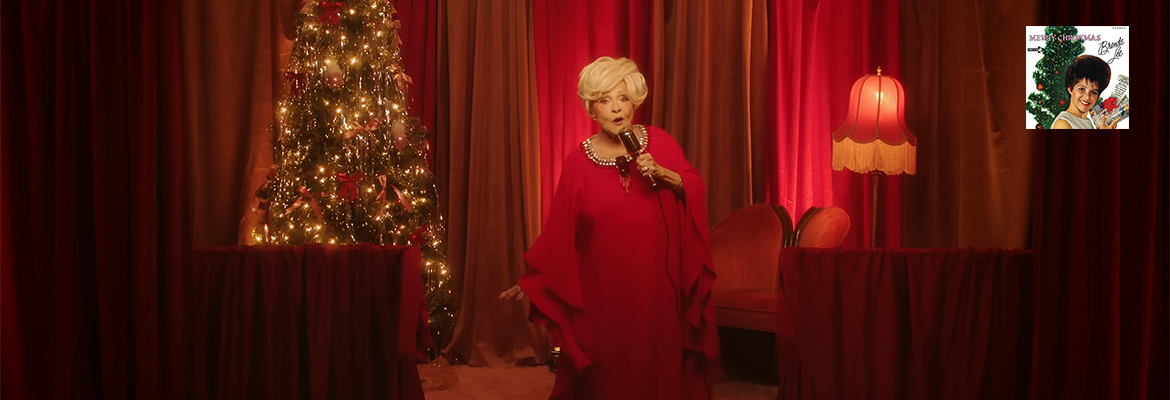
In a remarkable turn of events, 65 years after the original recording, the official music video for “Rockin’ Around The Christmas Tree” was finally released in 2023. Brenda Lee, who was only 13 years old when she first recorded the song on November 24, 1958, now appears at 78 years old, approaching her 79th birthday (December 11, 1944). The video is not only a nostalgic celebration of this timeless classic, but also a fascinating glimpse at the longevity of Brenda Lee’s legacy and the enduring appeal of the song, proving that some holiday tunes truly stand the test of time.
Why It Endures
There’s a reason this track resurfaces every December without fail. It isn’t just tradition. It’s structure.
The song is short, punchy, and instantly memorable. The opening guitar riff is enough to trigger recognition within seconds. The chorus is simple, repetitive, and physically engaging — you can clap along without thinking.
But beyond melody, there’s something deeper at play: intergenerational continuity.
Grandparents heard it on radio. Parents played it on CD. Children stream it on playlists curated by algorithms. Few songs manage to cross technological eras without losing relevance. This one thrives because it’s adaptable. It works in retro vinyl collections and TikTok holiday edits alike.
And then there’s Brenda Lee herself. Her vocal performance carries a playful grit — a bluesy edge that prevents the song from becoming overly saccharine. It swings. It struts. It smiles.
“Rockin’ around the Christmas tree, have a happy holiday…”
That line feels less like lyrics and more like an invitation.
A Cultural Fixture, Not Just a Song
Today, “Rockin’ Around The Christmas Tree” is more than a seasonal single. It’s a ritual. It signals the beginning of the holidays as clearly as decorations or snowfall. Its reemergence on charts decades after release proves something rare in pop music: true classics don’t expire — they evolve.
In a media landscape that constantly reinvents itself, this 1958 recording continues to find new life in modern series, streaming platforms, and holiday playlists. It’s cheerful without being naïve, nostalgic without being outdated.
The magic lies in its balance. Rock ’n’ roll energy meets Christmas tradition. Youthful spirit meets timeless melody.
And every December, without fail, it returns — not as a relic of the past, but as a living part of contemporary pop culture.
“Rockin’ Around The Christmas Tree” isn’t just played during the holidays. It is the holidays.